From an Oblique Angle
  • Blog
  • THINK TO NEW WORLDS
  • Bigfoot: The Life and Times of a Legend
  • The Fire Ant Wars
  • Articles

Joseph Henry Jackson as a Fortean

5/16/2017

0 Comments

 
Picture
​Bookish and fascinated by Fort, though he fairly quickly lost track of trends among Forteans.

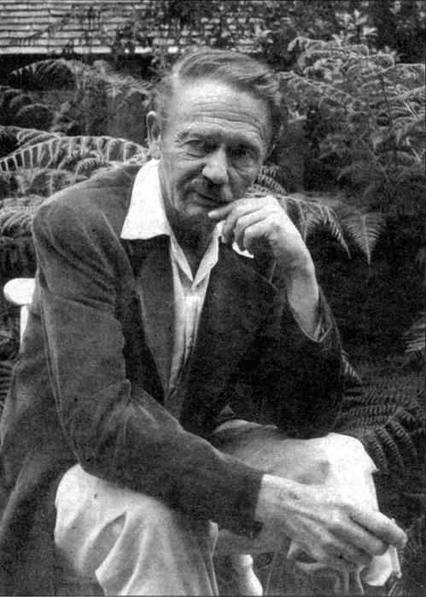
Joseph Henry Jackson was born 21 July 1894 in Madison, New Jersey to Herbert Hallet Jackson and Marion Agnes Brown. He had a younger brother named Gordon, born in 1898. At the time of the 1900 census, Herbert was an iron merchant. Later, Marion tutored music. In 1910, when he was about 16, Joseph was a stock runner. He attended Peddie, a private boarding school, and Lafayette College, in Easton Pennsylvania, from 1915 to 1917. His father died in 1914. He served in the U.S. ambulance corps during World War I, and afterwards moved to the San Francisco Bay Area, where ehe lived with his younger brother and mother. 

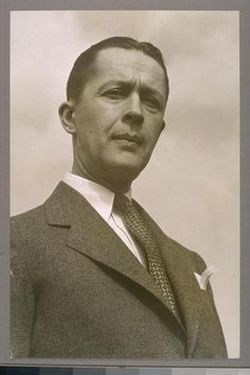
After a brief stint in advertising, Jackson was associated with Sunset magazine from 1920 to 1928, serving as editor for his last two years there—and so began his love affair with the West. On 20 June 1923, he married Charlotte Emanuella Cobden, in Berkeley; they had a daughter, Marion, name dafter his mother, in 1927. In 1924, while still with Sunset, he reviewed books—the program was “The Bookman’s Guide”—over Pacific Coast radio. He started in Oakland, before moving to San Francisco, then becoming syndicated. Jackson continued the radio work until 1943. He reviewed books of the San Francisco “Argonaut” from 1929 to 1930. In 1930, he went to work reviewing books for the San Francisco Chronicle (“A Bookman’s Notebook”), continuing until his death. His reviews were also carried by the Los Angeles Times starting in 1948.
Read More
0 Comments

Clark Ashton Smith as a Fortean

3/1/2017

0 Comments

 
Picture
​He moved through the Lovecraft circle and a circle of Forteans.

About Clark Ashton Smith there is much written—though he remains, even today, less famous than his peers, H. P. Lovecraft and Robert E. Howard—and one approaches discussing him with trepidation: for their is also fanatical devotion to him, and mis-steps will be severely reprimanded. Still, it is worth a brief biographical overview, to highlight some of the lineaments that ultimately supported the Fortean community as well as Smith.

Clark Ashton was born 13 January 1893 in Long Valley, California, to Fanny and Timeus Smith. Early on, the family moved to Auburn, California, and built a cabin that served as Clark’s home for most of his life. The younger Smith never attended high school, reputedly because of a fear of crowds, and instead was taught at home. Famously, he read through a dictionary and the Encyclopedia Britannica (which was also the reading material of another Fortean, whose circle was tangential to Smith’s, Kenneth Rexroth). He taught himself French and Spanish.

Smith was something of a writing prodigy, selling stories to “Black Cat” magazine when he was 17. Among other genres, “Black Cat” published fantastic fiction and was warmly remembered by the later Fortean Miriam Allen Deford. Indeed, the magazine even published Fort’s fiction, “How Uncle Sam Lost Sixty-Four Dollars,” in 1904, not long before Smith broke into its pages.


Read More
0 Comments

Garen and Kirk Drussai as Forteans

3/10/2016

4 Comments

 
​Enthusiastic—but slippery!—Forteans.

Note that this is an update, revision, and compilation of a series of posts I published several years ago.

There is some confusion about who Garen and Kirk Drussai even were.   I can be sure that Garen was born 17 June 1916 in the Bronx: all relevant documents confirm this.  But what was her name?  According to her death certificate and the birth certificate of her son, Garen’s maiden name was Lewis.  A search of the census records, however, fails to find any Garen Lewises—and Garen is an extremely uncommon name.  A clue to her identity can be found in her social security application. There she gives her name as Clara Hettler and her parents as Benjamin Hettler and Annie (Besner) Hettler.  The 1920 and 1930 census does record a family of Hettlers living in the Bronx, headed by Benjamin and Annie (Besner), with a daughter, Clara, born about 1916.

Clara Hettler filled out her social security application in December 1936.  It seems very possible that she changed her name in the late 1930s when Hettler—a variation of Hitler—would have been an inconvenient name to carry.  (It is also possible that she married in the 1930s and later divorced.)  Further confirmation that she Clara and Garen are indeed the same person come from a 1966 obituary for the eldest of the three Hettler sisters listed on the 1920 census, Estelle.  The article lists her parents and her sisters as Gertrude, the middle child, and Garen Drussai, indicating that although the rest of the family did not change its name—except upon marriage—they accepted their youngest daughter’s new name (at this point, Garen had married and divorced Kirk, and came by Drussai that way).

Read More
4 Comments

Miriam Allen de Ford and Maynard Shipley as Forteans

11/13/2015

0 Comments

 
Picture
​The first couple of Forteanism. An update and extension on something I wrote in 2011 (!).

Miriam Allen deFord was born in 1888 to a pair of Philadelphia doctors, Moses deFord and Frances Allen.  She was the oldest of three children.  Her paternal grandfather had emigrated from France, and she remembers the Northeast Philadelphia neighborhood she grew up in as being mostly French.  Moses made helped put himself through college and medical school teaching French classes, which is how he met Frances Allen—she was one of his students.  Frances Allen descended from a long line of Philadelphia Quakers.  They were engaged around 1883; Moses attended Jefferson Medical College (graduating 1886) and encouraged Frances’s interest in medicine.  When he started his second year of school, she started her first at the Women’s Medical College of Philadelphia (now part of Drexel University).  She graduated in 1887, the year that they married.


Read More
0 Comments

Lilith Lorraine as a Fortean

2/10/2015

6 Comments

 
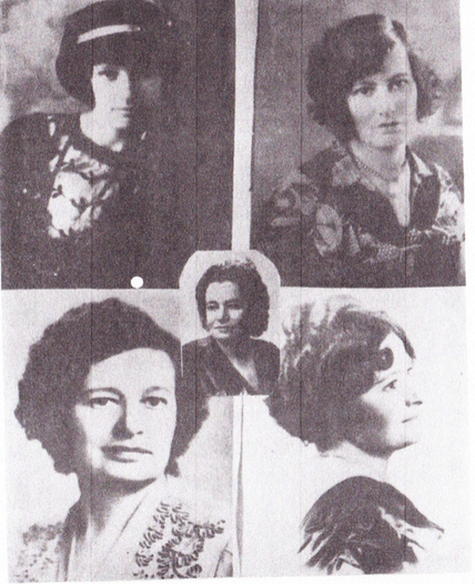
PictureCollage of Lilith Lorraine at various ages from Cleveland Lamar Wright's "The Story of Avalon."
So astounding a Fortean life, even her admirers cannot believe it all. This one is massively long.

Lilith Lorraine went by many names, so many it is not even easy to identify her birth name. The conventional sources have her born 19 March 1894 and give her name then as Mary Maud Dunn. None of this information, though—as far as I can tell—come from contemporary documents: birth certificates, newspaper announcements, etc. Her birthdate is given on her death certificate and, while she was alive, she did say that her birth name was “Mary Maud.” Probably this is true, but in the 1900 and 1910 censuses she went only by Maud or Maude.

She was the only child of John Beamon Dunn and Lelia Nias. Maud descended from what amounts to royalty in Corpus Christi, Texas; her paternal grandfather had been one of the first settlers, of the area, having migrated from Ireland, and her father was a Texas Ranger and cattleman. In 1932, Lilith—lets call her that for simplicity—would edit his memoirs, Perilous Trails of Texas. “Red” Dunn, as her father was nicknamed, collected Corpus Christi memorabilia, which he donated to a local museum, after he had spent years displaying it.


Read More
6 Comments

John LiTSTer as a Fortean

12/5/2014

2 Comments

 
Picture
One damned letter. And a juicy story.

It’s not Lister. It’s Litster. Thayer got it wrong. Lots of internet sites get it wrong. Not Lister, Litster.

John Litster was born 30 April 1886 in Alva, Scotland to George Litster and Janet Romanes. Litster says his father was in government service, and when John was three, the family relocated to South Africa, where he lived for thirteen years. He attended college in Scotland, then returned to Johannesburg, working in mining until he was twenty-three. He had contracted malaria, and at that time it had developed into blackwater fever; doctors told him he needed a change of scenery. Litster chose Denver, Colorado, where he could continue to work as a mining engineer. Almost all of that history comes from Litster’s own report; I’m only confident that he was born in 1886, and that he did live in Scotland when he was about 15—at least, there’s a John Litster of that age in the 1901 Scottish census.


Read More
2 Comments

The Bookman: Joseph Henry Jackson, part II

3/3/2011

0 Comments

 
Picture
According to Miriam Allen de Ford, Jackson reviewed Fort’s Wild Talents, which came out in June 1932—a month or so after Fort’s death.  De Ford mentions the review in her biography of Fort written for Boucher’s Magazine of Fantasy and Science Fiction; she did not give any bibliographical information, however, and I have been unable to locate it.  I looked through the San Francisco Chronicle for June 1932; as well, librarians at the California State Library compiled an index to the Chronicle, and there is no listing for a review of Wild Talents.  (There is for Fort’s collected works, though.)  It is entirely possible that Jackson published it elsewhere, but I don’t know its location.  Assuming it exists, though, that dates Jackson’s awareness of Fort to the early 1930s, just after he joined the Chronicle, at the very least.

What is known is that his interest in Fort became public (again?)—and positive—in the early 1940s, first with the aforementioned review of Fort’s collected works, introduced, edited, and indexed by Tiffany Thayer and published by Henry Holt.  Jackson took the opportunity of the publication as an excuse to introduce Fort and his ideas to a wide world, making it clear that he was a Fortean “in spirit” if not “in fact,” as he put it in his “Bookman’s Daily Notebook” on 1 May 1941 (p. 17).

Having now read this article—which is also referenced by de Ford in her biography—it is clear that Jackson’s interpretation of Fort influenced de Ford greatly.  Both saw Fort the man as relatively uninteresting—at least they didn’t find much in his biography to note.  Like so many others, they were attracted by his ideas.  Jackson characterized Fort as “The Man Who Kept Saying ‘No!’”  He stood against scientists who made too positive declarations, Jackson thought, and pointed out that there were yet many unexplained things in this world, “hushed up” by scientists because they did not fit into contemporary theories.  There’s a certain truth to this, of course, but seeing Fort as only a compiler of the odd ignores his humor and his alternate theories—both of which influenced later thinkers more than the collecting.

Jackson, though, does point to some of these other parts of Fort, comparing him to Rabelais at one point, and noting that while many may not like his writing style—and may therefore dismiss him as sane—others will entertain the teasing thought that perhaps Fort is the only one who is sane, the rest of the world crazy.  Those who think so, he says, have “made the first step to becoming a Fortean, because” they have shifted into a new dimension and asked, “What if?”  (Not coincidentally, a central question in science fiction.)  To those, he recommends Thayer’s Fortean Society which he—at least at this relatively early date—saw as having “no ax to grind” and “no other purpose” than making people reconsider received opinions.

Jackson had reason to return to Fort the following year.  He was editing and introducing a collection of Ambrose Bierce’s short stories called Tales of Soldiers and Civilians.  The book came out in 1943, but the introduction suggests that it was written in 1942.

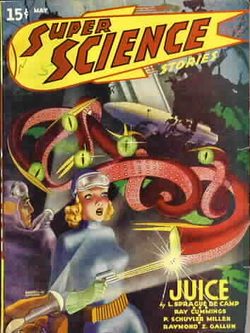
Jackson begins the introduction by considering Bierce’s mysterious end: on 26 December 1913 he crossed into Mexico and was never seen from again.  This disappearance, Jackson notes, had become more famous than Bierce’s writings, with plenty of people speculating on the writer’s final days.  Jackson obliquely references Robert Heinlein’s novella "Lost Legacy" published in 1941, which had Bierce joining the Lemurians on Mt. Shasta.  Jackson suggested Fort’s “mystical” explanation was better.  Noting that Bierce disappeared about the same time as someone named Ambrose Small, Fort impishly suggested that perhaps there was an Ambrose collector about.  Though only a small comment, the introduction shows a familiarity with Fort and science fiction, and this before it is generally supposed that Jackson and Boucher met.  Note that Heinlein’s tale appeared in Super Science Stories, not exactly top-flight science fiction (and was published under the name Lyle Monroe, I believe: see illustration).

We do know that Boucher and Jackson had befriended by the following year--1943—and Fort seemed to be part of that friendship, or least led them in a parallel direction.  As mentioned before, Boucher became interested in reports that stones were falling from the sky over Oakland.  Jackson, too, had his curiosity piqued and mentioned the stones in his “Bookman’s Daily Notebook” on 1 September 1943.  He used the reports as another opportunity to introduce Fort to a public that had not properly attended the writer.

This article evinced a more expansive understanding of Fort, which may reflect Boucher’s influence, Jackson’s development, or his willingness to go further in a second piece.  At any rate, Jackson started by describing Fort as a clip collector who wanted to encourage skepticism of science.  He mentioned, again, Thayer and the Fortean Society, again lauding them as carrying on Fort’s work, singling out Thayer’s introduction to the collected works as an excellent encapsulation of the Fortean approach to life.  (Boucher did not share this enthusiasm for Thayer’s introduction; at least by the 1950s—after Thayer had made many enemies—he compared it to Thayer’s earlier introduction to Lo! And found it lacking that Fortean je ne sais quoi.)  Miriam Allen de Ford praised the article in a letter to Boucher and hoped it would gain Fort more readers.

But Jackson did not stop at this conventional—one is tempted to same provincial—interpretation of Fort.  He went on to praise Fort’s Rabelaisian exaggerations: “He juggled paradoxes and played games with words—even with sentence structure,” Jackson wrote.  “But you’d better read him,” he admonished.  “While you’re reading you won’t be sure if you’re on your head or heels.  But then Fort knew that.  He wrote to shake up the reader.  He does.”

There’s an echo of Maynard Shipley’s comment that reading Fort is like riding a comment.  But while Shipley is loathe to take any of Fort’s theorizing seriously and spends time defending science against what he sees as Fort’s naiveté, Jackson eschews any such defense of science.  Not to put too fine a point on it, but it’s possible to see a transition taking place here, from the Bay Area provincial interpretation of Fort to the looser, more radical understanding championed by Bay Area Forteans in the years after World War II.  It is tempting to suggest, as well, that World War II itself mencouraged this new interpretation: the war made it seem that much more likely that humans were, indeed, property; that sinister forces controlled the world; that science would doom us all and that there needed to be not just new facts, but new theories.

Better to take a Fortean approach—to note that possible interpretation, leave it hanging for contemplation, but be ready to dismiss it as only fiction: another story we tell ourselves to make sense of a world that is always beyond our full comprehension.


0 Comments

The Provincials: Miriam Allen de Ford and Maynard Shipley, part V

2/15/2011

0 Comments

 
Miriam Allen de Ford and Maynard Shipley discovered Charles Fort in 1921.  De Ford was at a library in Oakland, where she came across Fort’s The Book of the Damned.  It had been published two years before.   She flipped through the book, found it intriguing, and took it home to Shipley, in Sausalito.  “My husband and I sat up all night, reading the book aloud to each other, unable to put it down,” she wrote later.

What was the attraction?

Shipley was primarily drawn to the catalog of odd facts—he had little time for Fort’s theories, whether meant as jokes or not.  Although obviously a committed scientist, Shipley was open to expanding the known laws to account for unusual phenomena.  For instance, in 1919—the same year Fort published The Book of the Damned—he investigated Dr. Albert Abrams for The Scientific American.  Abrams was a San Francisco doctor who claimed amazing results with “electronic medicine.”  At first, Shipley—who de Ford admits several times was quite naïve—accepted Abrams findings.  Eventually, though, he concluded that the doctor was both a charlatan and a dupe.

In her biography of him, de Ford writes that he had several unusual experiences himself.  His house in Mill Valley, for instance, was haunted.  She said,


Read More
0 Comments

The Provincials: Miriam Allen de Ford and Maynard Shipley, part IV

2/7/2011

0 Comments

 
Picture
In historian Kenneth Starr’s categorization, “Provincial” (or “High Provincial”) San Francisco preceded the “Baghdad by the Bay” image that evolved after World War II, but was never completely replaced by it.  By Provincial, Starr means to invoke San Francisco’s status as the capital of the West.  Provincial San Francisco is marked by certain professions: manufacturing, banking, law, insurance, shipping, government, and food processing.

Provincials are also particular about class stratifications—in a way that Bohemians and the later Baghdadders were not.  “All elites are obsessed with status,” Starr writes in Golden Dreams, “but in San Francisco—insecure, yet affluent and stylish—social maneuvering had long since become a blood sport.”

The pressure from Baghdadders and the post-World War II changes also turned Provincials attention to the past, as a place to affirm the city’s status and the class stratifications.  That did not mean provincials were opposed to change.  Indeed, it was the business elite that stood for the destruction of the Montgomery Block and its replacement with the Trans-America building and parking lots.  Bohemians were opposed to such changes—as well cross-town freeways and other modernizations.

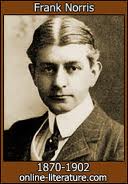
In conjunction with Provincial values, authors developed a particular literary style, probably best embodied by Frank Norris, who was both fascinated and repelled by the City’s businesses and Bohemia.  This literature was characterized by naturalistic detail—Zola was an influence—that was alloyed with bits of the picturesque, whimsy, and the paranormal.

Shipley and de Ford clearly fit into this mold, with their socialism (as opposed to the anarchism of Rexroth and others) and concern with class stratification as well as their focus on the naturalistic (science), leavened with an openness toward the new and unexplained.


0 Comments

The Provincials: Miriam Allen de Ford and Maynard Shipley, part III

2/7/2011

0 Comments

 
Picture
De Ford and Shipley only stayed in the socialist party and San Francisco for a short time.  They moved out of the city in 1920 for Sausalito.  They left the Socialist Party in 1922, thinking it had moved too far right.  While never a member of the communist party, de Ford believed in revolution, not reformation.  After leaving the party, their activism slowed.  (It was also curtailed by Shipley’s heart attack that year.)  de Ford worked for the insurance company until 1923, when she was forced out because of her radical ties.  She had been doing journalism even as a claims adjuster, though, and she continued that, along with other odd jobs.  Shipley was lecturing.  They also found Haldemann and Julius’s Little Blue Books, and both wrote a number of volumes.  In 1924, their extra time became focused on the Science League, founded by Shipley to combat the spread of anti-evolutionist sentiment and laws.  They continued with that until 1932.

Shipley died in 1934.  De Ford grieved in Hawaii for a time, visited her family in the East, and then returned to San Francisco.  She continued to move from job to job and develop her writing.  De Ford had been writing detective fiction for the pulps since the 1920s and was very interested in crime writing.  She dabbled in true crime as well as writing about a number of leftist martyrs who had been wronged by the justice system.  In the late 1930s and early 1940s, inspired by having typed up so much of Shipley’s science material, she drifted into science fiction, mentored by Anthony Boucher.  By this point, she was living in one of the Provincial enclaves—the Ambassador Hotel—and writing full time.


0 Comments
<<Previous
Powered by Create your own unique website with customizable templates.
Photo from Marcin Wichary