From an Oblique Angle
  • Home
  • Blog
  • Bigfoot: The Life and Times of a Legend
  • The Fire Ant Wars
  • The Forteans
  • Articles
The Soldier of Fortune: E. Hoffman Price 02/01/2011
0 Comments
 
Picture
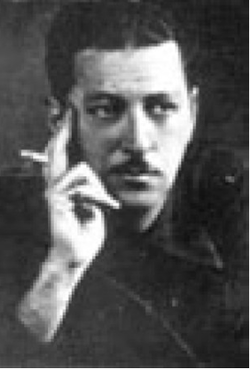
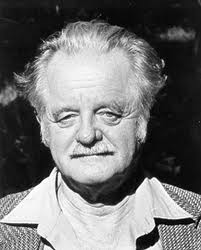
E. Hoffman Price was a prolific pulp writer who dabbled in Forteanism—before finding to too dogmatic.

He was born in 1898 near Fresno California.  His father was farmer.  The family sold its orchard in 1905 and moved to San Jose.  Later, his parents would separate, and he would stay with his mother, only meeting his father later in life.  It may be—not to dabble too much in psychohistory (psychobabble)--that the absence of a father figure made Price obsessed with his own manliness.  At any rate, his later memoirs--The Book of the Dead, Trooper of the 15th Horse, the introduction to his collection Far Lands, Other Days, and short columns for fan publications in the 1970s—certainly perseverate on what it takes to be a man.


Read More
Add Comment
 
On the ubiquity and salience of Forteanism in post-War San Francisco Bohemianism: 01/27/2011
0 Comments
 
Picture
Two examples.  The first comes from a letter written by Edward F. Ricketts to Don Emblem dated 3 November 1943.  Ricketts was a marine biologist who developed into something of a philosophe.  He is best known for his friendship and work with John Steinbeck.   At the time, Ricketts was living in the Monterey area, where he was also friendly with Henry Miller and Joseph Campbell.  Emblem was a poet.

Ricketts wrote, “Your speaking of Henry Miller reminds me to say that Janko met him down there, and Miller speaks of coming on here again.  I think he is a good man.  Charles Fort makes my tired ache, although I realize I am one of a minority.  Many people whose minds I respect admire him: Janko; at one time John; Toni.  Most of the writers whose work appears not to be circumscribed by form are those who have got to use it as familiarly as a person uses his senses.”

The context of the reference to Fort is not exactly clear; Emblem’s article, as far as I know, has not survived.  But it seems fair to say that Emblem probably brought up the subject of Fort.  The important point here is to note that in early 1940s, Fort was well-known among the Monterey-area Bohemians.  In particular, Ricketts specifically references Janko—Jean Varda, a Greek painter who had been in the U.S. Since 1939.  Janko and Henry Miller (another Fortean) were good friends.  (At the time of the letter, though, Miller was in southern California.)


Read More
Add Comment
 
The Godfather: Kenneth Rexroth 01/27/2011
0 Comments
 
Picture
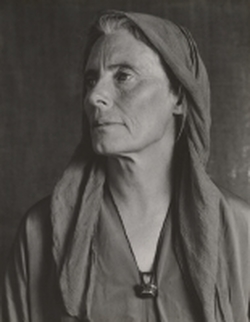
The Godfather: Kenneth Rexroth

Little remembered today, Kenneth Rexroth was a major influence on the art world through the middle of the twentieth century, especially in San Francisco.  In a fittingly Fortean way, he both recurs throughout the history of Forteanism and is peripheral to the subject.  He never wrote directly about Forteanism, and his work shows no influence from Fort.  But, it is impossible to write about the development of Forteanism without referencing him.

Rexroth was born in South Bend Indiana in 1905.  He was raised in a family that had extensive ties to socialism and had been involved in abolitionist movements, including working on the Underground Railroad.  These would have significant effects on Rexroth throughout his life.

His father, Charles Rexroth, had originally intended to become a doctor, but never finished his schooling and instead feel into pharmaceutical sales.  If socialism was one influence on Rexroth, then his father’s alcoholism and philandering was another, causing drastic shifts in the family’s fortune—from mansions to shared rooms—and putting the boy into untenable situations, as when the young Rexroth was forced to live with his paternal grandmother, who was senile and beat him mercilessly for no reason.  (Rexroth would, in turn, become abusive.)  Kenneth was close to his mother, Delia, but she had many illnesses and eventually died in 1916, when he was about eleven.  (His father died two years later.)


Read More
Add Comment
 
Guru in the Land of Fuck: Henry Miller, part v 05/26/2010
0 Comments
 
Picture
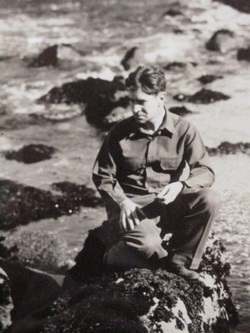
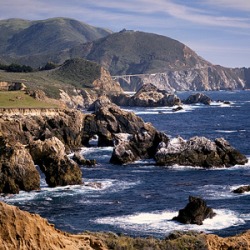
Big Sur
Miller travelled through Europe and the United States (on the trip that would inspire his critique of America, The Air-Conditioned Nightmare) before reaching California and his own personal paradise, Big Sur.  Miller was a dedicated Bohemian, scraping together cash here and there, unafraid to bum from others, and work if only accountable to himself—certainly life in wild Big Sur required a lot of manual labor.  Miller eked by on very little: looking back from the 1950s on his untouchable royalties in France, for example, he mused, “A hundred a month--regularly—would have solved our problems.  (It would have then.  Today no sum is large enough to solve anybody’s problems.  The bombs eat up everything.)”

He fit in with the developing Bay Area scene well, extending the axis of the Bohemia south to the Monterey Peninsula.  His ideas about art were similar to those being developed among the poets and painters of the regions.  “And what is the potential of man, after all?  Is he not the sum of all that is human?  Divine, in other words?  You think I am searching for God.  I am not.  God is.  The World is.  Man is.  We are,” he told Conrad Moricand, echoing the Eastern-inflected ideas of the other artists.  Every one, every thing was a mixture of good and bad, of white magic and black magic: even the bomb, which could destroy the world but also provide energy.


Read More
Add Comment
 
Guru in the Land of Fuck: Henry Miller, part ii 05/24/2010
0 Comments
 
A bit more on Henry Miller, clarifying some of the earlier post, which overstated some points.

Henry Miller was born 26 December 1891 and raised in Brooklyn, New York.  By his own account, he had a happy childhood.  In the 1910s and 1920s, he moved the Greenwich Village, a Bohemian center.  His family had been unreligious, but Miller himself was drawn to religious ideas, and so found himself captivated by many of the Metaphysical movements then current in Greenwich Village>  He played around with Ouija boards, for instance.  As well, he was  drawn to Eastern religions.  Lao Tzu’s Tao Te Ching, was especially influential, as were Herman Hesse’s Siddhartha (on the life of the Buddha) and Sinnett’s Esoteric Buddhism.  He said he always found gurus more interesting than Christ because of their quest for Enlightenment.

“Freedom,” he wrote in the 1950s, “is a misnomer.  Certitude is more like it.  Unerringness.  Because truthfully there is always only one way to act in any situation, not two, nor three.  Freedom implies choice and choice exists only to the extent that we are aware of our ineptitude.  The adept takes no thought, one might say.  He is one with thought, one with the path.”

Miller (whose literary evaluations were always as eccentric as he was: “My encounters with books I regard very much as my encounters with other phenomena of life or thought.  All encounters are configurate, not isolate.  In this sense, and in this sense only, books are as much a part of life as trees, stars or dung.   I have no reverence for them per se.  Nor do I put authors in any special, privileged category.  They are like other men, no better, no worse”) also found himself drawn to the early weird writers: he was in “thrall” to Rider Haggard’s She.  (Indeed, his Books in my Life spends an inordinate amount of time on Haggard.)  He was also a devoted fan of Algernon Blackwood.  These works, and others like them, including the books of Bulwer-Lytton appealed to him as Romantic yawps against the deadening materialism of the time.  He wrote, “around 1880 English novelists of imagination—the writers of ‘romances’—began to introduce into their works the so-called and miscalled ‘supernatural’ element.  Theirs was a revolt against the fateful tendency of the times, the bitter fruits of which we of this generation our tasting.”

It may be that this love of early weird writers and his own religious quest fuelled his interest in Madame Blavatsky’s Theosophical movement—after all, there are a lot of echoes of Bulwer-Lytton in Blavatsky’s writings.  At any rate, he found Theosophy endlessly engaging.  Blavatsky’s Voice of Silence (along with Sinnett’s Esoteric Buddhism) provided his writing with themes, symbols, and character names.

It may also be that Miller was impressed by Blavatsky because he had a life-long interest in finding a unity to all the world—and Blavatsky’s systemization of science, religion, and the occult certainly did that.  Spengler’s The Decline of the West also did something similar.  Miller became fascinated with it, as did many in the Greenwich Village scene.  (Excerpts appeared in one of the Little Magazines.)  It gave an intellectually respectable base to Blavatsky’s speculation.  It also resonated with his own sense of history’s trajectory.  Despite having an exuberant love of life, Miller thought that the world was running down, and Spengler advocated this, with his premonition that the West was on the decline.  Miller wrote in the 1950s:

“That the American way of life is an illusory kind of existence,  that the price demanded for the security and abundance it pretends to offer is too great.  The presence of these ‘renegades,’ small in number though they be, is but another indication that the machine is breaking down.  When the smash up comes, as now seems inevitable, they are more likely to survive the catastrophe than the rest of us.  At least, they will know how to get along without cars, without refrigerators, without vacuum cleaners, electric razors and all the other ‘indispensables’ . . . probably even without money.  If ever we are to witness a new heaven and a new earth, it must surely be one in which money is absent, forgotten, wholly useless.”

Add Comment
 
The Generator: Kenneth MacNichol, part ix 03/01/2010
0 Comments
 
Further research has turned up more material on Kenneth MacNichol.  I have spoken with one of his descendants, the grandson from a relationship which Kenneth did not formalize with marriage.  The woman in question was named Dorothy, and she may have been the woman for whom Kenneth left Louise.  At any rate, they were a couple in the 1920s and, according to the grandson, part of the “Bloomsbury Set.”

“The Bloomsbury Set” was a loosely allied group of artists, writers, and thinkers—including Virginia Woolf and J. M. Keynes—who met around Bloomsbury, London, during the first part of the twentieth century.  It’s not easy to distill a single vision—or even say if the group cohered enough to be taken together—but there is a sense of Bohemianism about them, as they argued about the limits of domesticity, the place of women in society, and the problems with capitalism and imperialism.  If MacNichol was indeed part of this set, he would have felt at home, as it had echoes of his time in Carmel and foresaw his time in San Francisco (as well as New York, perhaps.)

But it’s not clear that MacNichol actually belonged to this group.  Certainly, he lived in the area—his flat at 120 Clapton Common, where he and Dorothy held soirees, was only a few miles from Bloomsbury.  But MacNichol’s grandson remembers the stories of the set revolving around George Bernard Shaw, DH Lawrence, and HG Wells (and his father—Kenneth’s son—remembers meeting Shaw), none of whom are usually included in the Bloomsbury Set.  Indeed, Woolf was partially writing against the realistic style of Wells.

At any rate, it seems fair to say that Kenneth probably fell in with a crowd of London thinkers that influenced him to—as he said—take on more serious material, economics and sociology, and got him thinking about how to relate writing and advertising.

At some point in the late 1920s, MacNichol and Dorothy broke up and he married again, this time, according to his grandson, a woman named Olga.  That marriage lasted only a short time before he married Netta in 1930.

There was also one other marriage not yet mentioned, Susan, whom he married in 1944.  That gives a total of 6 wives, plus one other long term relationship. 

Add Comment
 
San Francisco Geography 02/10/2010
0 Comments
 
I’ve been doing some reading on San Francisco geography, as well—soon to be supplemented by reading on LA geography—to get a sense of how the city (and Bay Area more generally) is organized and try to fit that in with what I know of the California Forteans.  And some interesting patterns have emerged.

Berkeley geographer Richard A. Walker recognizes four residential types.   He writes, “This civic landscape springs from the distinctive class, political and cultural nature of the Bay Area—relatively wealthy, petty bourgeois, bohemian, cosmopolitan, labourist, environmentalist, egalitarian, anti-modern—and embodies the contradictions of the libertine capitalism that is a local trademark.”

The first, and most iconic, category is the Victorian homes.  These resulted from the work of middle class reformers in the 1850s and 1860s, who saw San Francisco as too raw, too libertine, and sought to impose a more appropriate look for the city.  These were not the “modern” buildings of, say, Los Angeles.  Rather they were ornate and gaudy—Thorstein Veblen was thinking of them when he was at Stanford and writing the Theory of the Leisure Class.  Many of these were burned in 1906.  But the rich never abandoned downtown San Francisco as they did so many other inner cities, and so they remained as a tribute to the class identity of the nineteenth century rich.

A second category is what Walker calls ecotopian suburbs.  This is composed of the mock cabin and craftsman houses tucked into hills and surrounded by oaks, redwoods, and eucalyptus.  These areas, although they look natural, were made: the coast range of the Bay Area was mostly grass, and so homeowners and developers had to plant all the trees, as well as building the houses.  The inspiration for these places, Walker argues, is Yosemite and Big Trees.  Ecotopian suburbs can be found in parts of San Francisco, in the Oakland Hills, in Berkeley, and Marin.  These are the homesteads of the libertarian, bohemian middle class.  They combine mysticism, Romanticism, and Masonic ideals and stand in opposition to LA, once again: there the wave of modernist architecture expunged the arts and crafts movement.  In San Francisco, there was a conscious anti-modern movement.

A number of Bay Area Forteans are associated with this ideal.  Polly Lamb lived in Oakland; Anthony Boucher was in Berkeley—both in just these kinds of spots.  Most prominent, probably, is George Haas.  He idealized Big Trees State Park.  He built organic gardens around his Oakland home.  There were certainly anti-modern strains to his thought.

The third category is the suburb proper.  Oakland does not fit into this category because in the late nineteenth century that city wrestled with San Francisco for industrial dominance, and soon developed its own urban infrastructure: it was its own city, taking advantage of new sectors that developed after San Francisco came of age, especially food canning, auto building, and electrical manufacturing.

San Francisco did try to push South but was stopped by the presence of many elite estates in San Mateo County, which prevented the movement.  This fits into the Fortean story, too, for their developed a Bohemian connection between the Bay Area and less developed places to the south, especially Carmel, but also San Mateo.  These places retained their Bohemian, mystical vibe.  Marin did, too: remember, the Golden Gate Bridge wasn’t completed until 1936, and for many seemed unnecessary.

Instead, development marched East, and the Bay Area did well: even as San Francisco’s manufacturing declined, around 1910 the region was only outpaced by Detroit (cars!), Cleveland, and its competitor to the South, LA.  Again, new sectors allowed the outlying areas to compete with their older neighbors, food processing, oil, and chemical work, especially.  Good wages and an extensive trolley system allowed workers to move East and North into new tract homes.

Past Alameda county, Contra Costa county developed its suburbs more slowly.  Places like Hercules and Rodeo were essentially company towns, with workers shacking up on business property.  (San Francisco financiers had a level of control this far out that they did not have in the East Bay, as much of the money for Contra Costa’s development came from the City.)  To tie in with the earlier connections, these suburbs also came to be supported by defense procurements as fortress California also built out in this direction.  But there is still some connection to Forteana even here, as Jack Parsons, the occultist rocket-developer from LA came north to work at Hercules Powder Company.

The fourth category is multi-family housing.  The university in Berkeley and the industrial areas in Oakland—especially with the coming of World War II—supported such dwellings, but the center for this residential type was San Francisco.  Apartments and residential hotels came into their own during the 1890s—before that, the need was taken care of by boarding out rooms.

The small rooms pushed people into the community: in places dominated by apartment buildings and residential hotels there was more life on the streets.  People ate out.  They went to coffee.  They went to movies.  These zones of dense dwelling, cheap entertainment, and public life are where experimental lifestyles took root.  This was the natural habitat of Bohemians, beats, hippes, gays: political rebels and public intellectuals.  (San Francisco was rich in such areas and so has a rich history of experimentation, with the Barbary Coast of the mid-nineteetnh century, the turn of the century Bohemianism, as well as the more obvious later manifestations.)

The Fortean connections here are obvious.  Miriam Alan de Ford lived in a hotel for most of her life, within walking distance of the library (urbanism made Forteanism easier, as there were vast collections of facts to study).  One thinks, also, of Kenneth MacNichol with his writers studio in the heart of one of San Francisco’s art districts, and Robert Barbour Johnson living in a little apartment and making appearances at the literary hotspots—indeed, it was this scene that drew him to San Francisco in the first place.

With the depression, and the drying up of investments, these areas began to decline.  Jobs moved to the suburbs, leaving the area old, infirm, and with decreasing political clout.  In the late 1940s and 1950s, the rich began to see these areas as blights in need of redevelopment.  And so there were fights between them and the remaining rebels, especially the beats in North Beach—what Kenneth Starr says was a battle between Provincials and Baghdadders.  Some of Old San Francisco was saved, and freeways were not allowed to cut through the old downtown.  But, the most iconic Bohemian place was lost.  This was the Montgomery Block, a warren of rooms housed by artists and such.  (Likely, a number of the people who attended MacNichols’s Fortean meetings lived here.)  In 1959, the structure—which had survived the 1906 fire—was bulldozed for a parking lot.  Later, the Trans-America Building was built there.  

Add Comment
 

    Author

    I am a father, husband, and independent scholar living in Folsom California.  I can be reached at joshuabbuhs_at_yahoo_dot_com.

    Picture

    Archives

    December 2011
    October 2011
    September 2011
    July 2011
    May 2011
    April 2011
    March 2011
    February 2011
    January 2011
    December 2010
    November 2010
    October 2010
    August 2010
    July 2010
    May 2010
    April 2010
    March 2010
    February 2010
    January 2010
    December 2009
    November 2009
    October 2009
    September 2009
    August 2009
    July 2009
    June 2009

    Categories

    All
    Abstract Expressionism
    Advertising
    Albert Abrams
    Albert Laws
    Algernon Blackwood
    Aliens
    Allen Ginsberg
    Amazing Stories Quarterly
    Ambrose Bierce
    Anais Nin
    Andres Breton
    Anthony Boucher
    Anti War
    Anton Lavey
    Apollo 18
    Apports
    Astrology
    Automatic Writing
    Avram Davidson
    Beats
    Ben Hecht
    Berkeley Renaissance
    Bern Porter
    Bernard Heuvelmans
    Bfro
    Bigfoot
    Blavatsky
    Bloomsbury Set
    Bohemianism
    Book Of The Damned
    Booth Tarkington
    Buckminster Fuller
    Buddhism
    C. Daly King
    Charles Fort
    Charles Henri Ford
    Chingwah Lee
    Church Of Satan
    Clark Ashton Smith
    Conrad Moricand
    Culture
    D. H. Lawrence
    Damon Knight
    David Bascom
    Di Gava
    Doubt
    Drugs
    E. Hoffman Price
    Ed Ricketts
    Edmund Pearson
    Erle Korshak
    Fortean Geography
    Fortean Society
    Forteanism
    Forteans
    Frank Norris
    Franklin Rosemont
    Galaxy
    Garen Drussai
    Geeks
    General Semantics
    George Bernard Shaw
    George Haas
    George Leite
    George Sterling
    Grover Krantz
    H. G. Wells
    H. P. Lovecraft
    Henry Kuttner
    Henry Miller
    Herman Hesse
    Horace Gold
    If
    Info Journal
    International Fortean Organization
    Isaac Asimov
    J. M. Keynes
    Jack Kerouac
    Jack Parsons
    Jack Spicer
    Jack Williamson
    Jean Varda
    Jeff Meldrum
    John Steinbeck
    John W. Campbell
    Joseph Henry Jackson
    Josephine Miles
    Kathleen Ludwick
    Kenneth Macnichol
    Kenneth Rexroth
    Kenneth Starr
    Kirk Drussai
    Laurence Stallings
    Louis Eytinge
    Magazine Of Fantasy And Science Fiction
    Manana Society
    Marvin Sargent
    Masculinity
    Matt Moneymaker
    Maynard Shipley
    Men's Adventure Magazines
    Mermaids
    Metablogging
    Miriam Allen De Ford
    Multiple Sclerosis
    N Meade Layne
    Neeli Cherkovski
    Nikola Tesla
    Noelle Curtis
    Oakland Tribune
    Ouspensky
    Parker Tyler
    Paul Willis
    Phe Laws
    Philip K. Dick
    Philip Lamantia
    Polly Lamb Goforth
    Ralph Rayburn Phillips
    Ray Palmer
    Richard Lamb
    Rider Haggard
    Robert Allerton Parker
    Robert Barbour Johnson
    Robert Bloch
    Robert Duncan
    Robert Ernst Dickhoff
    Robert Heinlein
    Robert Payne
    Robert Spencer Carr
    Roman Macdougald
    Ron Willis
    Round Robin
    Sam Moskowitz
    San Francisco Chronicle
    San Francisco Renaissance
    Science Fiction
    Sherlock Holmes
    Silicon Valley
    Skeptics
    Socialism
    Spiritualism
    Stanford
    Stwe
    Summerland
    Sun Maps
    Surrealism
    T. Swann Harding
    Theosophy
    Thirteen Ways Of Looking At A Fortean
    Tiffany Thayer
    Ucla
    Ufos
    Virginia Woolf
    Vortex
    Weird Tales
    Weird Tales Of The City
    Weird Tales Of The City
    Wildman

    RSS Feed


Create a free website with Weebly