From an Oblique Angle
  • Home
  • Blog
  • Bigfoot: The Life and Times of a Legend
  • The Fire Ant Wars
  • The Forteans
  • Articles
The Surrealist: Philip Lamantia, part i 02/28/2011
0 Comments
 
Picture
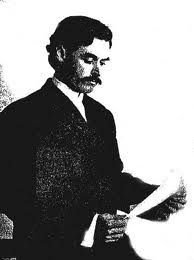
The poet Philip Lamantia was not only interested in Forteanism—his life, with its lost works and drastic changes of viewpoint—is itself almost a Fortean artifact.

Lamantia was born in San Francisco on 23 October 1927 to Nunzio and Mary Tarantino Lamantia, both of whom had emigrated from Sicily and settled in with San Francisco’s Italian community.  He was interested in poetry from a young age—but also in the growing mass culture of the time.  He took great enjoyment in radio plays—he called them “A child’s bed of sirens” later in life.  Lamantia also delighted in comics—and the weird.  A scrapbook in his papers at UC Berkeley, apparently put together when he was about twelve, included numerous cut-outs from Ripley’s Believe It or Not comics.  In junior high school, he started reading Poe and Lovecraft and Clark Ashton Smith.  According to some reports, these enthusiasms had him tossed out of school for “intellectual delinquency.”

When he was fourteen, he saw the surrealist works of Dali and Miró at San Francisco’s Museum of Modern Art.  It was a signal moment.  He read through all the works on surrealism available to him, eventually quitting school for New York, where he was welcomed enthusiastically by Andre Breton and other European exiles who had fled the war and Nazism for safer shores.  He first published a poem in View and the surrealist organ VVV when he was only fifteen.

At the time, it seems, Lamantia was a committed materialist.  In a series of lecturing letters to George Leite, he complained that Circle was too eclectic and tended to publish poor work.  Surrealists, by contrast, had a definite agenda.  Surrealism, he said, is based on materialism and is uninterested in mysticism or religion.  But it is fascinated by magic: because magic preceded mysticism and was a way of manipulating the universe.  Science was thus its heir.  Mysticism, he said, supplicates, while magic transforms: it was revolutionary, and he was interested in revolution.  He disavowed any connection with Stalinism but was in sympathy with the Trotskyites.

Add Comment
 
The Bookman: Joseph Henry Jackson, part I 02/25/2011
0 Comments
 
Picture
Although not as deeply influenced by Charles Fort as some of the other Bay Area Forteans, Joseph Henry Jackson can be seen as central to the Fortean scene.

Jackson was born 21 July 1894 in New Jersey.  He was educated on that side of the continent and migrated to California shortly after the Great War.  It is not clear to me if he served, although he did register.  The 1920 census has him in Berkeley, California, living with his younger brother and mother (who herself had emigrated from Scotland).  Jackson had “none” listed as his job, as did his mother.  His brother, Gordon was an officer in the U.S. Navy, which may be what prompted the move in the first place.  Jackson lived in Berkeley until he died in 1955. 


Read More
Add Comment
 
Obelists* Fly High 02/18/2011
0 Comments
 
Speaking of Charles Fort and locked-room mysteries, here we have an excellent example of the intertwining: C. Daly King’s Obelists Fly High (1935).

King himself, from what I can quickly glean, was an interesting character, an unorthodox psychologist, mystery writer, and something of a theosophist in the Oudpensky tradition.  But more on him later, as we move East (and as I more thoroughly research him).

For our purposes, his book is interesting because it appealed to Anthony Boucher, and so can be used to understand how Boucher—and through him, other Bay Area writers—made use of Fortean ideas.  Boucher was a proponent of the book.  For example, when Willy Ley—the rocket sc eintist and science writer—wrote him in 1942 asking Boucher to guide him through the thickets of science fiction, pointing out the most interesting bits, he recommended a look at King’s book as it “contains much entertaining commentary on Charles Fort.”  To another correspondent and obvious Fortean—Gray Chandler Briggs, a medical doctor and roentologist from St. Louis, he wrote, “Have you read G. Daly King’s OBELISTS FLY HIGH, with the gorgeous minor character who keeps trying to solve the mystery by Fortian methods?”

Boucher’s description of the Fortean connections of King’s book, though, undersells how important Fort is to the plot.  The story concerns Michael Lord, a New York City police officer, who is charged with protecting a surgeon on a plane trip across the country.  The surgeon is off to operate on the Secretary of Defense (who is also his brother) and has received a death threat: he will die at noon central time.  And that he seems to do, upon sniffing from a glass bulb Lord hands to him.  (The bulb was supposed to contain a gas that helped with nausea.)  As it turns out [SPOILER ALERT]


Read More
Add Comment
 
The Provincials: Miriam Allen de Ford and Maynard Shipley, part V 02/15/2011
0 Comments
 
Miriam Allen de Ford and Maynard Shipley discovered Charles Fort in 1921.  De Ford was at a library in Oakland, where she came across Fort’s The Book of the Damned.  It had been published two years before.   She flipped through the book, found it intriguing, and took it home to Shipley, in Sausalito.  “My husband and I sat up all night, reading the book aloud to each other, unable to put it down,” she wrote later.

What was the attraction?

Shipley was primarily drawn to the catalog of odd facts—he had little time for Fort’s theories, whether meant as jokes or not.  Although obviously a committed scientist, Shipley was open to expanding the known laws to account for unusual phenomena.  For instance, in 1919—the same year Fort published The Book of the Damned—he investigated Dr. Albert Abrams for The Scientific American.  Abrams was a San Francisco doctor who claimed amazing results with “electronic medicine.”  At first, Shipley—who de Ford admits several times was quite naïve—accepted Abrams findings.  Eventually, though, he concluded that the doctor was both a charlatan and a dupe.

In her biography of him, de Ford writes that he had several unusual experiences himself.  His house in Mill Valley, for instance, was haunted.  She said,


Read More
Add Comment
 
The Provincials: Miriam Allen de Ford and Maynard Shipley, part IV 02/07/2011
0 Comments
 
Picture
In historian Kenneth Starr’s categorization, “Provincial” (or “High Provincial”) San Francisco preceded the “Baghdad by the Bay” image that evolved after World War II, but was never completely replaced by it.  By Provincial, Starr means to invoke San Francisco’s status as the capital of the West.  Provincial San Francisco is marked by certain professions: manufacturing, banking, law, insurance, shipping, government, and food processing.

Provincials are also particular about class stratifications—in a way that Bohemians and the later Baghdadders were not.  “All elites are obsessed with status,” Starr writes in Golden Dreams, “but in San Francisco—insecure, yet affluent and stylish—social maneuvering had long since become a blood sport.”

The pressure from Baghdadders and the post-World War II changes also turned Provincials attention to the past, as a place to affirm the city’s status and the class stratifications.  That did not mean provincials were opposed to change.  Indeed, it was the business elite that stood for the destruction of the Montgomery Block and its replacement with the Trans-America building and parking lots.  Bohemians were opposed to such changes—as well cross-town freeways and other modernizations.

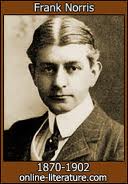
In conjunction with Provincial values, authors developed a particular literary style, probably best embodied by Frank Norris, who was both fascinated and repelled by the City’s businesses and Bohemia.  This literature was characterized by naturalistic detail—Zola was an influence—that was alloyed with bits of the picturesque, whimsy, and the paranormal.

Shipley and de Ford clearly fit into this mold, with their socialism (as opposed to the anarchism of Rexroth and others) and concern with class stratification as well as their focus on the naturalistic (science), leavened with an openness toward the new and unexplained.


Add Comment
 
The Provincials: Miriam Allen de Ford and Maynard Shipley, part III 02/07/2011
0 Comments
 
Picture
De Ford and Shipley only stayed in the socialist party and San Francisco for a short time.  They moved out of the city in 1920 for Sausalito.  They left the Socialist Party in 1922, thinking it had moved too far right.  While never a member of the communist party, de Ford believed in revolution, not reformation.  After leaving the party, their activism slowed.  (It was also curtailed by Shipley’s heart attack that year.)  de Ford worked for the insurance company until 1923, when she was forced out because of her radical ties.  She had been doing journalism even as a claims adjuster, though, and she continued that, along with other odd jobs.  Shipley was lecturing.  They also found Haldemann and Julius’s Little Blue Books, and both wrote a number of volumes.  In 1924, their extra time became focused on the Science League, founded by Shipley to combat the spread of anti-evolutionist sentiment and laws.  They continued with that until 1932.

Shipley died in 1934.  De Ford grieved in Hawaii for a time, visited her family in the East, and then returned to San Francisco.  She continued to move from job to job and develop her writing.  De Ford had been writing detective fiction for the pulps since the 1920s and was very interested in crime writing.  She dabbled in true crime as well as writing about a number of leftist martyrs who had been wronged by the justice system.  In the late 1930s and early 1940s, inspired by having typed up so much of Shipley’s science material, she drifted into science fiction, mentored by Anthony Boucher.  By this point, she was living in one of the Provincial enclaves—the Ambassador Hotel—and writing full time.


Add Comment
 
The Provincials: Miriam Allen de Ford and Maynard Shipley, part II 02/05/2011
0 Comments
 
Picture
Maynard Shipley was born on 1 December 1872 in Baltimore, Maryland.  He was the fourth of six sons.  Elmon Shipley, the family’s patriarch, could trace his American ancestors back to seventeenth-century Maryland.  His mother, Sarah Armitage Jerome, came from a prominent Baltimore family.  In Miriam Allen de Ford’s biography of Shipley, she wrote Elmon was “about as bad a husband and father as can be imagined—a domestic tyrant, a philanderer, and a paragon of refined selfishness.”  Elmon made a good living and was religious for a time, but eventually moved into the wholesale liquor business, which had him out of church and becoming a free-thinker.  This last influenced Maynard greatly.  In 1887, Elmon deserted the family.


Read More
Add Comment
 
The Provincials: Miriam Allen de Ford and Maynard Shipley, part I 02/05/2011
0 Comments
 
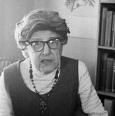
San Francisco's connection to Forteanism preceded the San Francisco Renaissance and founding of the Fortean Scoiety.  What historian Kenneth Starr calls "Provincial" San Francisco had its Forteans, too--Miriam Allen de Ford and her husband Maynard Shipley.

Read More
Add Comment
 
The Soldier of Fortune: E. Hoffman Price 02/01/2011
0 Comments
 
Picture
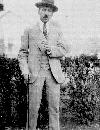
E. Hoffman Price was a prolific pulp writer who dabbled in Forteanism—before finding to too dogmatic.

He was born in 1898 near Fresno California.  His father was farmer.  The family sold its orchard in 1905 and moved to San Jose.  Later, his parents would separate, and he would stay with his mother, only meeting his father later in life.  It may be—not to dabble too much in psychohistory (psychobabble)--that the absence of a father figure made Price obsessed with his own manliness.  At any rate, his later memoirs--The Book of the Dead, Trooper of the 15th Horse, the introduction to his collection Far Lands, Other Days, and short columns for fan publications in the 1970s—certainly perseverate on what it takes to be a man.


Read More
Add Comment
 

    Author

    I am a father, husband, and independent scholar living in Folsom California.  I can be reached at joshuabbuhs_at_yahoo_dot_com.

    Picture

    Archives

    December 2011
    October 2011
    September 2011
    July 2011
    May 2011
    April 2011
    March 2011
    February 2011
    January 2011
    December 2010
    November 2010
    October 2010
    August 2010
    July 2010
    May 2010
    April 2010
    March 2010
    February 2010
    January 2010
    December 2009
    November 2009
    October 2009
    September 2009
    August 2009
    July 2009
    June 2009

    Categories

    All
    Abstract Expressionism
    Advertising
    Albert Abrams
    Albert Laws
    Algernon Blackwood
    Aliens
    Allen Ginsberg
    Amazing Stories Quarterly
    Ambrose Bierce
    Anais Nin
    Andres Breton
    Anthony Boucher
    Anti War
    Anton Lavey
    Apollo 18
    Apports
    Astrology
    Automatic Writing
    Avram Davidson
    Beats
    Ben Hecht
    Berkeley Renaissance
    Bern Porter
    Bernard Heuvelmans
    Bfro
    Bigfoot
    Blavatsky
    Bloomsbury Set
    Bohemianism
    Book Of The Damned
    Booth Tarkington
    Buckminster Fuller
    Buddhism
    C. Daly King
    Charles Fort
    Charles Henri Ford
    Chingwah Lee
    Church Of Satan
    Clark Ashton Smith
    Conrad Moricand
    Culture
    D. H. Lawrence
    Damon Knight
    David Bascom
    Di Gava
    Doubt
    Drugs
    E. Hoffman Price
    Ed Ricketts
    Edmund Pearson
    Erle Korshak
    Fortean Geography
    Fortean Society
    Forteanism
    Forteans
    Frank Norris
    Franklin Rosemont
    Galaxy
    Garen Drussai
    Geeks
    General Semantics
    George Bernard Shaw
    George Haas
    George Leite
    George Sterling
    Grover Krantz
    H. G. Wells
    H. P. Lovecraft
    Henry Kuttner
    Henry Miller
    Herman Hesse
    Horace Gold
    If
    Info Journal
    International Fortean Organization
    Isaac Asimov
    J. M. Keynes
    Jack Kerouac
    Jack Parsons
    Jack Spicer
    Jack Williamson
    Jean Varda
    Jeff Meldrum
    John Steinbeck
    John W. Campbell
    Joseph Henry Jackson
    Josephine Miles
    Kathleen Ludwick
    Kenneth Macnichol
    Kenneth Rexroth
    Kenneth Starr
    Kirk Drussai
    Laurence Stallings
    Louis Eytinge
    Magazine Of Fantasy And Science Fiction
    Manana Society
    Marvin Sargent
    Masculinity
    Matt Moneymaker
    Maynard Shipley
    Men's Adventure Magazines
    Mermaids
    Metablogging
    Miriam Allen De Ford
    Multiple Sclerosis
    N Meade Layne
    Neeli Cherkovski
    Nikola Tesla
    Noelle Curtis
    Oakland Tribune
    Ouspensky
    Parker Tyler
    Paul Willis
    Phe Laws
    Philip K. Dick
    Philip Lamantia
    Polly Lamb Goforth
    Ralph Rayburn Phillips
    Ray Palmer
    Richard Lamb
    Rider Haggard
    Robert Allerton Parker
    Robert Barbour Johnson
    Robert Bloch
    Robert Duncan
    Robert Ernst Dickhoff
    Robert Heinlein
    Robert Payne
    Robert Spencer Carr
    Roman Macdougald
    Ron Willis
    Round Robin
    Sam Moskowitz
    San Francisco Chronicle
    San Francisco Renaissance
    Science Fiction
    Sherlock Holmes
    Silicon Valley
    Skeptics
    Socialism
    Spiritualism
    Stanford
    Stwe
    Summerland
    Sun Maps
    Surrealism
    T. Swann Harding
    Theosophy
    Thirteen Ways Of Looking At A Fortean
    Tiffany Thayer
    Ucla
    Ufos
    Virginia Woolf
    Vortex
    Weird Tales
    Weird Tales Of The City
    Weird Tales Of The City
    Wildman

    RSS Feed


Create a free website with Weebly